The sentence you will say in a hallway this week, and what it will cost. A leadership keynote your people will still be quoting in November.
Ty Pollock / Former Executive Director of PR and Communications / Founder, Ty in Progress
Not a menu of twelve topics. One signature keynote, rebuilt for your room, with a closing application that swaps by audience.
Somewhere in your organization is a person who used to bring ideas and does not anymore. Nothing dramatic happened to them. A manager said one accurate, well intentioned sentence at the wrong moment, and they went quiet. The manager does not remember saying it. This talk gives your leaders a name for that, a story they will not forget, and three tools they can use before Friday.
A diagnostic for where a person is standing before you give them feedback. Nobody in the rapids can evaluate anything, including your very reasonable point. Give altitude first, then feedback, in that order, every time.
Critical feedback does not land proportionally. Thirty minutes beat fourteen hours. Not an argument for never saying the hard thing, an argument for knowing the freight so you spend it on things worth it.
Most leaders only see their team's work in a review, with a decision attached. That is the flattest vantage point there is, and it is where they form their entire opinion of what their people can do.
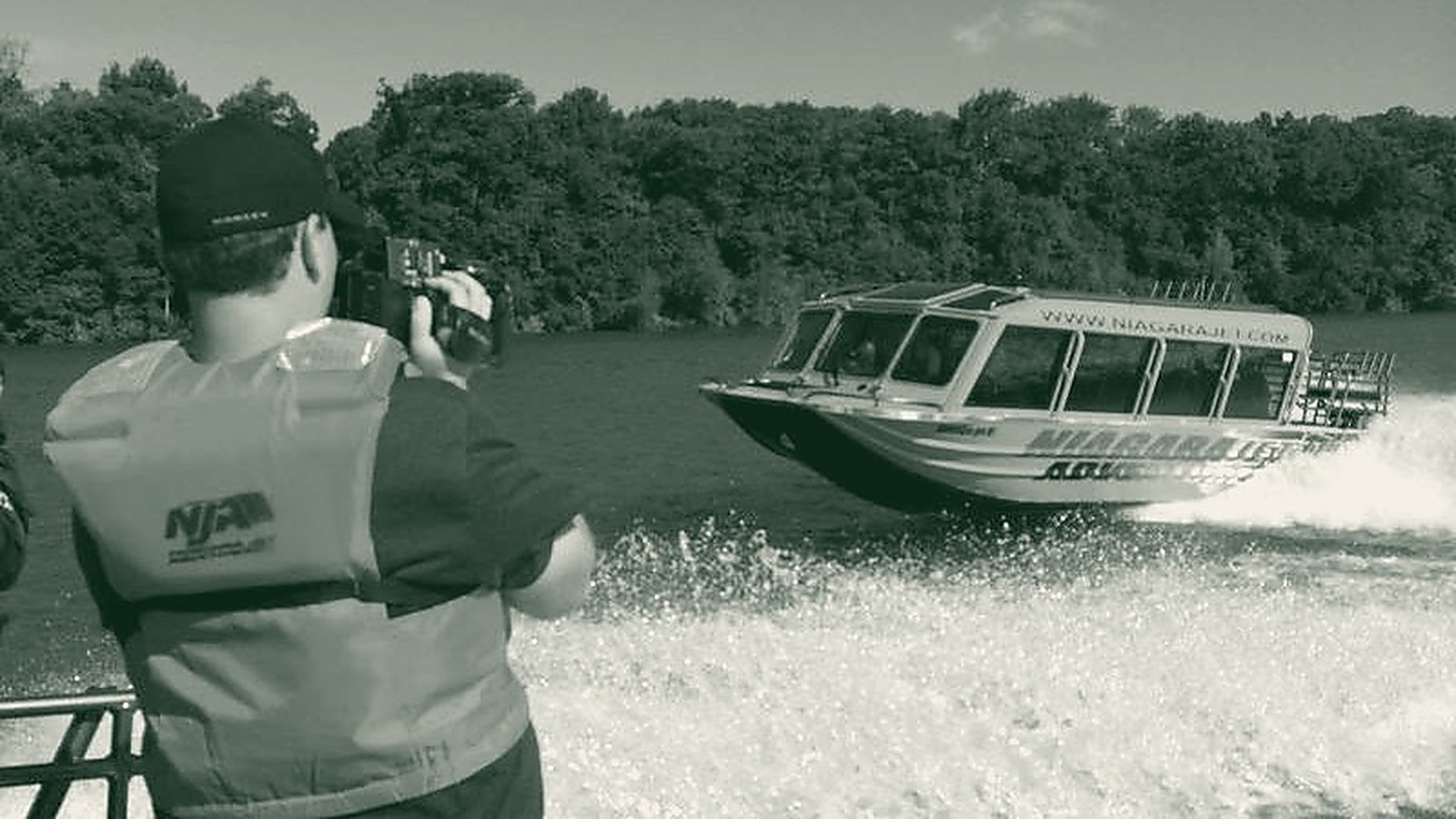
In 1861 a captain took a boat down through the rapids below Niagara Falls. It broke him. He never worked the water again and he was dead two years later.
For about 180 years, the only way to put a boat in the water below those falls was to lower it down a cliff with a crane. When a jet boat builder out of Idaho said he was going to drive one up instead, the locals told him: nobody has ever done this, nobody can do it, anyone who ever attempted it died.
Ty Pollock was the only camera on the boat.
Twelve miles of Class 5 water. When they reached the base of the falls, the Coast Guard, Border Patrol, Homeland Security and the Canadians all came out to ask how they did it. It was the best day of his life.
Then thirty minutes at a customs checkpoint erased the whole thing. By that night he had convinced himself the day was nothing.
The agent was not a villain. He was polite, he was doing his job correctly, and he was right to stop a very large young man crossing an international border alone with unmarked equipment. He did everything right, and he cost Ty a day he never got back.
And he will never know. He went home that night and had dinner. He has never thought about it since.
Neither will you.
Almost every leadership talk is about what leaders should do. Be more empathetic. Communicate better. Your directors have heard it, and they already believe they are doing it.
This one is about what leaders accidentally did, and it arrives through a story where Ty is the one who screwed up. He never points at the room. For forty minutes he is the guy who ruined Niagara Falls for himself. The turn happens in a single sentence near the end, and by then the audience has done the math themselves.
It is genuinely funny for thirty minutes and then quietly devastating for five. People leave talking about the boat. They text their team about the sunrise.
Tell me the room and I will tell you which version of this talk fits it.
Ty saw the same waterfall four times in eighteen hours. It turns out that is a diagnostic. Before you give somebody feedback, work out which one they are standing in.
In the rapids. They cannot evaluate the thing, they can only survive it. Never give hard feedback to someone standing here. They are not being defensive, they are unable to hear you.
The helicopter. Altitude does not make the work smaller, it makes it make sense. You are the only one in the building who has this view. Handing it to someone costs four minutes.
Ground level, at the railing. The flattest place to stand, and where every setback lands hardest because there is nothing around it for scale. This is the dangerous one.
You go back on purpose, with nothing riding on it. The only vantage point anyone actually picks, and the only view you get to keep.
Diagnose the vantage point before delivering feedback. Most bad feedback in an organization is not wrong, it is correct feedback delivered to someone still hanging out the side of the boat.
Look at one person's work with nothing attached. No meeting, no decision, no review. Then go tell them what they actually saw.
Find the person on the team who went quiet in the last year and never came back, and ask them what happened. They may not like the answer.
That is the sentence where the room goes quiet. Everything before it is setup.
The breakout is where leaders do the exercises on their own real situations, and it ends with every person scheduling a specific conversation on their actual calendar before they leave the room. The closing application swaps by audience, so the keynote lands the same whether your room is leadership, sales, or a mixed convention floor.
Includes a discovery call four to six weeks out so the closing application is written for your actual room, not a generic version of it.
Delivered live, not read from a script. Built by someone who spent sixteen years behind a camera, so it is shot and lit like broadcast.
A produced version for internal learning libraries and on demand tracks, with a live Q and A window if you want one.
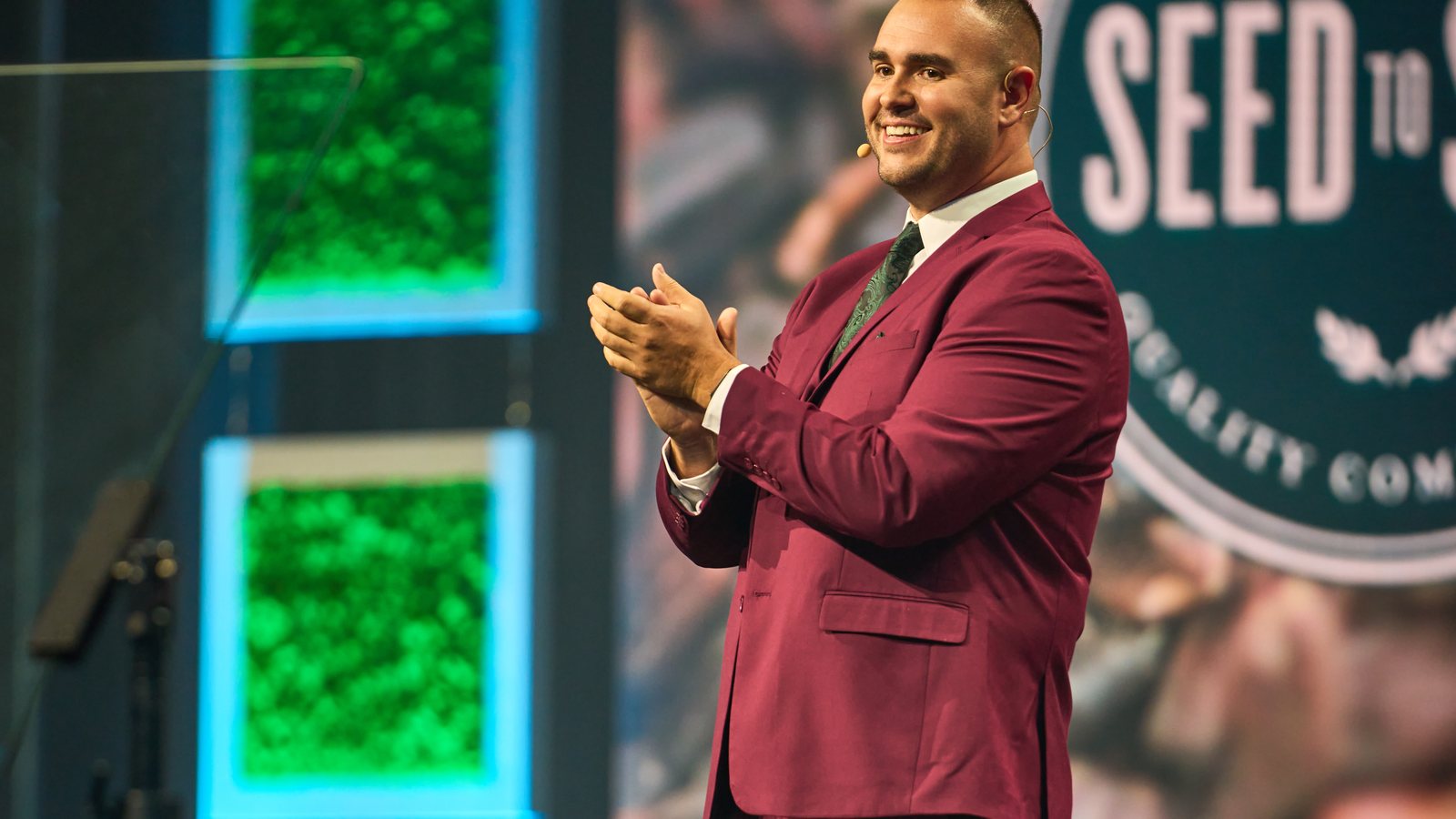
Mainstage footage from Young Living International Convention, five thousand seats. Organizers who want it before it is posted can request the private link in the form below.
Want more than a sizzle reel? A continuous, unedited twenty minute segment is available on request. Most organizers who are serious ask for it, and I would rather you saw the unedited version.
Fewer than one in ten organizers picks the speaker alone. So everything you need to put me in front of a committee is on one page, written and ready to forward.
Send me the run of show and I will tell you honestly which one fits, including if it is the short one.
Ty Pollock spent sixteen years across film production and corporate communications, most recently as Executive Director of PR and Communications, before founding Ty in Progress. He has delivered from the mainstage at Young Living International Convention to an audience of more than five thousand.
He is not a motivational speaker explaining leadership from the outside. He has sat in the chair, and he has been the one who said the sentence in the hallway.
His methodology is the mirror. His thesis is that lost is not the end, it is where your story begins.
He grew up in West Jordan, Utah, and holds a Bachelor of Film Studies with a business minor from the University of Utah.
Be True. Be You.
The more you tell me about who is in the seats and what you need them to walk out believing, the more specific I can make the close.